A monopoly is the closest thing business has to a finished game: one company supplies the market, sets the price and decides how fast things change. Very few companies get there, fewer stay there, and the ones that do eventually meet a regulator or a startup that thinks the rules are wrong.
This guide pulls together what Business Hub One has published on monopolies: what they are, how companies build monopoly power, why giants such as Nokia and Kodak lost it, what the US ruling against Google changed, and how startups, including Nigerian ones, break in.
Table of Contents
What a monopoly is, and what it is not
Economists sort markets by how much power any one seller has. A monopoly sits at one end of the scale.
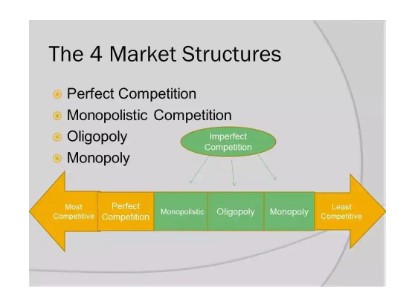
| Market structure | Sellers | Control over price | Example |
|---|---|---|---|
| Perfect competition | Many, selling identical goods | None | Farmers selling the same grade of maize |
| Monopolistic competition | Many, with different brands | Some | Fast food, hair salons, fashion |
| Oligopoly | A few large firms | Significant | Telecoms, cement, carmakers |
| Monopoly | One dominant firm | High | Electricity distribution in a franchise area |
In practice, “monopoly” rarely means 100% of a market. Regulators look for dominance: a share large enough, and barriers high enough, that a company can raise prices or shut out rivals without losing customers. Being big is not illegal in most countries. Abusing that position is.
A market leader is different. It is ahead, but it still has to compete. The gap between the two is where most of the stories below happen.
How companies build monopoly power
Most dominant companies use several of these at once.
1. A product rivals can’t easily copy
The strongest position starts with something customers can’t get elsewhere. Apple’s iPhone joined hardware, its own operating system and the App Store into one ecosystem. Once your photos, apps and messages live there, switching costs feel high, even when rivals are cheaper.
2. Network effects
A product with network effects becomes more valuable as more people use it. Facebook and WhatsApp are useful because your contacts are already there. Microsoft Office became the standard partly because everyone needed to open everyone else’s files. Each new user makes it harder for a challenger to win the next one.
3. Barriers to entry
Patents, licences, huge upfront costs and control of scarce inputs all keep newcomers out. Drug companies rely on patents: until one expires, no one else may sell a generic copy. In Nigeria, the capital needed to build cement plants, and past restrictions on cement imports, limited the field to a handful of large producers.
4. Buying the competition
Acquisitions remove rivals and add assets. Disney bought Pixar, Marvel, Lucasfilm and most of 21st Century Fox, giving it control of some of the most valuable characters in film. Facebook’s purchases of Instagram (2012) and WhatsApp (2014) are now used by regulators as textbook examples of buying a future competitor before it grows.
5. Economies of scale
The bigger the operation, the lower the cost of each unit. Amazon’s logistics network lets it deliver faster and cheaper than most retailers can, which wins more customers, which pays for more warehouses.
6. Owning the route to the customer
Control the shelf, the default setting or the distribution network, and rivals struggle to be seen. Coca-Cola’s bottling and distribution system puts it in almost every shop on earth. Google’s deals to be the default search engine on phones and browsers, discussed below, are the digital version of the same idea.
Why giants lose their grip
Dominance is not permanent. The most common cause of decline is not a regulator but the company itself.

- Nokia sold about 40% of the world’s mobile phones in 2007 and 2008. It stayed loyal to its Symbian software and physical keypads while Apple and Android moved to touchscreens and app stores. Microsoft bought its phone business in 2014. Nokia survives as a telecoms network equipment company.
- Kodak engineer Steven Sasson built the first digital camera in 1975. Kodak held back, fearing digital would eat into its profitable film business. Others did not wait, and Kodak filed for bankruptcy protection in January 2012.
- BlackBerry held roughly a fifth of the global smartphone market in 2009, built on secure email and physical keyboards. It was slow to adopt touchscreens and never built an app ecosystem to match Apple’s or Google’s.
- Yahoo was the front door to the internet in the late 1990s, but spread itself across email, news and portals while Google perfected search. It turned down a $44.6bn offer from Microsoft in 2008, and was sold to Verizon in 2017 for about $4.5bn.

The pattern is the same each time: a leader protects today’s revenue instead of building tomorrow’s, and underestimates how quickly customers will move once something better arrives.
A Nigerian example: Dangote Cement
Dangote Cement is the clearest case of market dominance in Nigeria. By most estimates it supplies well over half of the country’s cement, helped by vertical integration (it owns the limestone quarries, plants and trucks), economies of scale, and government policy that favoured local production over imports.
But dominance is not the same as a monopoly. BUA Cement and Lafarge Africa remain significant competitors, and high cement prices regularly draw criticism from builders, lawmakers and the competition regulator. Dangote’s position shows how far scale and policy support can take a company, and also that a dominant firm in Nigeria now operates under closer scrutiny than it once did.
When regulators step in: the Google case

Most countries have competition laws designed to stop dominant firms abusing their position. The best known are in the United States:
- Sherman Act (1890) outlaws monopolisation and agreements that restrain trade. It was used to break up Standard Oil, which controlled about 90% of US oil refining, in 1911.
- Clayton Act (1914) targets specific practices, including mergers that substantially reduce competition.
- Federal Trade Commission Act (1914) created the Federal Trade Commission (FTC) to police unfair competition.
These laws were behind the 1984 break-up of AT&T and the 1998 case against Microsoft for tying Internet Explorer to Windows.
What the court found
In October 2020, the US Department of Justice (DOJ) and a group of states sued Google under the Sherman Act. On 5 August 2024, Judge Amit Mehta ruled that Google is a monopolist and had acted illegally to keep its dominance in online search and search advertising.
The evidence centred on default placement. Google paid Apple, Samsung, mobile networks and browser makers to make Google the default search engine. The court heard that Google paid Apple about $20bn in 2022 alone. With roughly 90% of global search, Google gained more data than any rival, which made its search and ads better, which kept users coming back.
What happened next
In September 2025, the judge set out the remedies. He did not order Google to sell its Chrome browser, as the DOJ had asked. Instead, Google was barred from exclusive default-search contracts and ordered to share some of its search data with qualifying competitors. Google said it would appeal.
In a separate case in April 2025, a federal judge in Virginia found that Google had also illegally monopolised parts of the technology that matches advertisers with website publishers. The European Commission had already fined Google more than €8bn across three earlier cases (Google Shopping in 2017, Android in 2018 and AdSense in 2019).
Closer to home
Nigeria’s Federal Competition and Consumer Protection Act (FCCPA) of 2018 created the Federal Competition and Consumer Protection Commission (FCCPC), with powers to investigate abuse of dominance. In July 2024 the FCCPC fined Meta $220m over its data and competition practices on Facebook and WhatsApp. The Competition and Consumer Protection Tribunal upheld the fine in April 2025. The message to large platforms is clear: Nigerian regulators now act, too.
How startups break monopolies
Regulators move slowly. Startups often move first.
| Challenger | Incumbent | What they did differently |
|---|---|---|
| Netflix | Blockbuster | Subscriptions with no late fees, then streaming. Blockbuster went bankrupt in 2010. |
| Zoom | Skype | Video calls that “just worked” on any device. Microsoft retired Skype in May 2025. |
| Stripe | Banks and legacy payment processors | A few lines of code to accept payments online |
| Tesla | Petrol carmakers | Made electric cars desirable and forced rivals to follow |
| SpaceX | Government launch contractors | Reusable rockets that cut launch costs |
Nigeria has its own versions. Paystack made online card payments simple for small businesses at a time when established switches such as Interswitch were built for banks. Moniepoint and OPay took banking to street corners through agent networks and POS terminals, reaching customers that branches never did. Kuda built a bank with no branches and free transfers.
What these challengers have in common:
- They start in a niche the leader ignores. Small merchants, the unbanked, developers, people who hated late fees.
- They use technology the incumbent can’t adopt without hurting itself. Blockbuster earned millions from late fees. Banks earned from branch-based fees.
- They compete on experience, not only price. Faster sign-up, clearer pricing, better support.
- They build trust in public. Clear stories and visible founders help customers take a chance on an unknown brand.
The risks are real. Dominant firms can cut prices to starve a challenger, lobby for rules that suit them, or simply buy the startup. Many founders now plan for that exit from day one.
What this means for your business
- Aim for a defensible position, not a monopoly. Network effects, switching costs and a strong brand protect a business without inviting a regulator.
- Don’t become the next Kodak. If a new technology threatens your best product, test it yourself before a competitor does.
- Watch your dependence on one platform. If Google, Meta or a single distributor controls how customers find you, a policy change can hurt overnight.
- Know the rules. If you are growing fast in a small market, understand what the FCCPC considers abuse of dominance, such as exclusive deals or predatory pricing.
Sources
- US District Court for the District of Columbia, United States v. Google LLC, memorandum opinion (August 2024) and remedies decision (September 2025)
- The New York Times: ’Google is a monopolist,’ judge rules in landmark antitrust case
- US Department of Justice: antitrust case filings
- StatCounter: search engine market share
- The Guardian: Kodak files for bankruptcy protection
- Harvard Business Review: the real cause of Nokia’s crisis
- Federal Competition and Consumer Protection Commission (FCCPC)
- Clayton Christensen, The Innovator’s Dilemma (1997)
- N. Gregory Mankiw, Principles of Economics, 9th edition (2020)